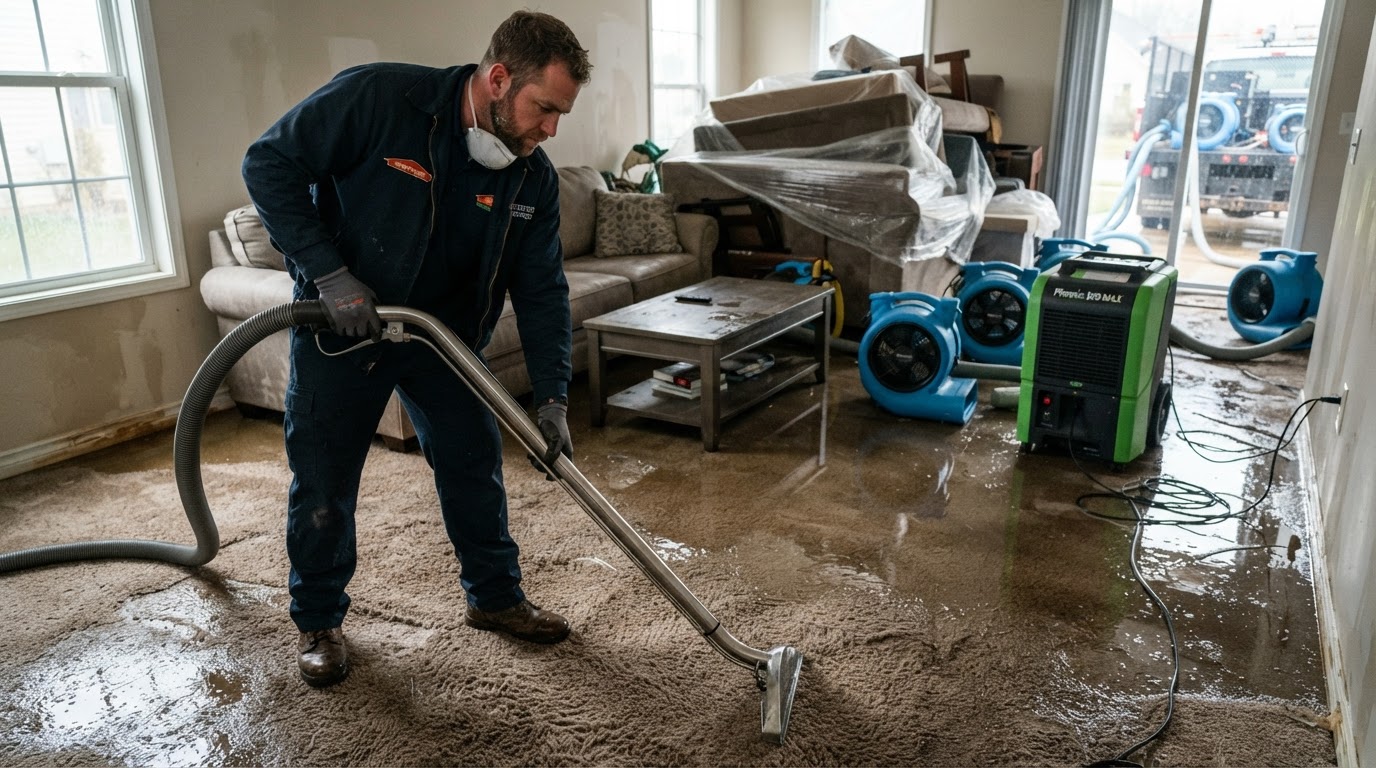
Water Damage Restoration in Madison, AL
Madison Water Damage Restoration helps property owners address unwanted water from leaks, overflows, flooding, plumbing failures, and storm-related intrusion. Services can include water extraction, removal of affected materials when appropriate, moisture assessment, and structural drying for residential and commercial properties.
- Residential Water Damage
- Commercial Water Damage
- Water Extraction
- Structural Drying
Need Water Damage Cleanup in Madison, Alabama?
Madison Water Damage Restoration provides water removal, water extraction, flood cleanup, sewage cleanup, and structural drying for residential and commercial properties in Madison, Alabama and surrounding North Alabama communities. Property owners can contact the company at (256) 588-8480 to request water damage assistance. Fast action can help reduce additional water damage.
Water Damage Cleanup Near Madison, AL
Water damage restoration is the process of removing unwanted water from a property, finding moisture that has migrated out of sight, and drying the building materials back to a stable condition. Visible standing water is only part of the problem — water travels beneath flooring, into wall cavities, behind baseboards, and through insulation, where it can remain hidden long after the surface appears dry.
When water enters a home or business in Madison, it rarely stays in one place. It wicks under flooring and into the subfloor, soaks into drywall and baseboards, travels inside wall cavities, and saturates insulation and cabinetry. In properties with crawl spaces, water can also collect beneath the structure. As indoor humidity rises from evaporating water, moisture can spread to areas that never touched the original water source.
Effective water damage cleanup combines water removal, moisture detection, water extraction, drying, and dehumidification. The goal is to address both the water you can see and the moisture you cannot. Without identifying hidden moisture, a property can feel dry while damp materials remain inside walls and beneath floors, which can lead to swelling, staining, odor development, and secondary moisture problems over time.
What Should You Do After Finding Water Damage?
Take these practical steps while keeping safety in mind:
- Stop the water source when it is safe to do so, such as turning off a supply valve for a known plumbing leak.
- Avoid energized electrical areas, outlets, panels, and appliances near standing water.
- Protect belongings by moving valuables and furniture away from the affected area when practical.
- Avoid walking through or touching contaminated sewage or black water.
- Contact a water damage cleanup company for water extraction and a moisture assessment.
- Begin documenting visible damage with photos where useful for your records.
Do not attempt dangerous electrical or plumbing repairs yourself. A professional can help assess the situation safely.
Water Damage Restoration Services in Madison, Alabama
Madison Water Damage Restoration addresses a full range of indoor water problems, from large-scale flooding to slow hidden leaks behind walls. Each service below links to a dedicated page with more detail about that type of water loss. The appropriate approach depends on the water source, the materials affected, and how long the moisture has been present.
Restoration
Complete water damage mitigation, extraction, moisture diagnostics, and structural drying to return residential and commercial properties to safe moisture levels.
Learn moreWater Extraction
Heavy-duty truck-mounted and submersible extraction systems to rapidly extract standing water from carpets, hardwood, tile, and concrete subfloors.
Learn moreFlood Cleanup
Groundwater intrusion, severe weather flooding, and surface water mitigation using regulated sanitization and thorough subfloor drying procedures.
Learn moreSewage Cleanup
Category 3 black water extraction, protective containment, non-salvageable material disposal, and comprehensive antimicrobial washdown.
Learn moreBurst Pipe Cleanup
Rapid response to pressurized plumbing failures, winter frozen pipes, supply line breaks, and water migration across multiple floors and ceilings.
Learn moreStorm Damage
Mitigating wind-driven rain intrusion, roof breach water spread, and storm-related structural flooding across Madison and North Alabama.
Learn moreStructural Drying
Commercial LGR dehumidifiers and high-velocity axial air movers paired with thermal hygrometer monitoring to thoroughly dry wall studs and subfloors.
Learn moreCommercial Restoration
Large-capacity drying and rapid water extraction designed to minimize business interruption for commercial offices, retail centers, and facilities.
Learn moreWater Heater Leaks
Addressing sudden 40–80 gallon tank bursts and slow valve leaks that saturate baseboards, utility closet framing, and surrounding finished floors.
Learn moreLaundry Room Cleanup
Extracting detergent-laden overflow water, drying subfloor cavities beneath laundry equipment, and checking moisture paths to lower levels.
Learn moreBathroom Overflow
Handling bathroom supply failures, toilet backups, and shower pan seepage that seep beneath tile thresholds and rot wooden subflooring.
Learn moreHVAC & Appliance Leaks
Clearing water from clogged AC drain pans, attic air handler leaks, dishwasher supply leaks, and refrigerator ice-maker line failures.
Learn moreCeiling & Wall Drying
Diagnosing wet drywall, sagging ceiling plaster, wet fiberglass insulation, and hidden moisture tracks behind paint and structural wall framing.
Learn moreCrawl Space Drying
Targeted crawl space water removal, vapor barrier assessment, and structural drying for hidden moisture beneath Madison homes.
Learn moreDishwasher Leak Cleanup
Kitchen water extraction and subfloor drying after dishwasher supply-line failures, drain backups, and under-cabinet leaks.
Learn moreAverage Water Damage Restoration Cost & Cleanup Pricing in Madison, AL
The cost of professional water damage restoration in Madison depends on the extent of the damage rather than one universal price. Water extraction cost, flood cleanup pricing, sewage cleanup cost, structural drying cost and emergency water removal cost all vary with the amount of standing water, the size of the affected area, whether the water is clean or contaminated, the number of rooms affected, the flooring and drywall involved, insulation and cabinets, moisture trapped inside wall cavities, the drying equipment needed, demolition requirements, accessibility, the duration of moisture exposure, commercial versus residential conditions, storm-related damage and any required repairs. A water damage restoration estimate is most accurate after an evaluation of the affected property.
What Affects the Cost of Water Damage Restoration?
Two homes with apparently similar water damage may require very different restoration procedures depending on how far the moisture traveled and what materials were affected. Water can migrate under flooring, behind baseboards, into drywall, into insulation, inside wall cavities, under cabinets, into subfloors, into crawlspaces, and through ceilings. This is why professional moisture inspection and an on-site evaluation are important for accurate pricing.
Pricing shown below represents general planning ranges for residential and light commercial water damage restoration projects in the Madison, Alabama area. These figures are not fixed prices or final restoration quotes. Accurate pricing requires an evaluation of the affected area, water source, moisture conditions, materials involved, extraction requirements, drying requirements, contamination level and any demolition or repair work that may be necessary.
Labor, Equipment & Major Cost Factors
Inspection, water extraction, moisture mapping, air movers, dehumidifiers, affected square footage, flooring, drywall, insulation, cabinets, structural materials, duration of moisture exposure, demolition where necessary and drying requirements.
Typical Project Planning Range
$1,000–$8,000+
Small contained water-loss events may fall near the lower portion of the range, while multiple affected rooms, extensive drying, demolition or hidden moisture can significantly increase the scope.
View service pageLabor, Equipment & Major Cost Factors
Standing-water depth, square footage, extraction equipment, emergency response conditions, flooring type, furniture or contents, accessibility, number of affected rooms and whether additional structural drying is necessary.
Typical Project Planning Range
$500–$4,000+
Localized extraction from one accessible area generally costs less than removing significant standing water throughout several rooms or levels.
View service pageLabor, Equipment & Major Cost Factors
Amount and source of floodwater, affected square footage, flooring, walls, insulation, contents, extraction, drying equipment, contamination, demolition, cleaning and accessibility.
Typical Project Planning Range
$1,500–$10,000+
Limited interior flooding may require extraction and drying only, while widespread flooding involving flooring, drywall, insulation or multiple rooms can substantially increase restoration costs.
View service pageLabor, Equipment & Major Cost Factors
Contaminated-water volume, affected square footage, extraction, containment, personal protective equipment, removal of contaminated porous materials, cleaning, sanitizing, drying and disposal requirements.
Typical Project Planning Range
$1,500–$8,000+
A limited sewage backup affecting a small hard-surface area generally costs less to remediate than contamination involving carpet, drywall, insulation, multiple rooms or structural materials.
View service pageLabor, Equipment & Major Cost Factors
Amount of released water, leak location, accessibility, standing-water removal, affected flooring, drywall, ceilings, insulation, cabinets, wall cavities, moisture mapping and structural drying.
Typical Project Planning Range
$1,000–$7,500+
A quickly discovered plumbing leak affecting one accessible area may require substantially less restoration than a burst pipe that releases water into walls, ceilings or several rooms.
View service pageLabor, Equipment & Major Cost Factors
Affected square footage, roof or exterior water entry, standing water, extraction, wind-driven rain, ceiling and wall saturation, flooring, insulation, debris, structural drying and accessibility.
Typical Project Planning Range
$2,000–$15,000+
Storm-related water intrusion affecting one contained area may require less restoration than widespread water entry involving ceilings, walls, insulation and multiple interior spaces.
View service pageLabor, Equipment & Major Cost Factors
Affected square footage, moisture levels, number of air movers, dehumidifiers, drying duration, flooring type, wall cavities, insulation, subflooring, ambient humidity and monitoring requirements.
Typical Project Planning Range
$800–$5,000+
A small localized drying project may require only limited equipment, while moisture across multiple rooms or trapped inside building assemblies can require additional equipment and monitoring.
View service pageLabor, Equipment & Major Cost Factors
Building size, affected square footage, standing water, flooring systems, walls, contents, equipment, business-use areas, extraction capacity, drying equipment, accessibility, contamination and restoration scope.
Typical Project Planning Range
$2,500–$25,000+
Small office or retail water losses may remain near the lower portion of the range, while larger facilities or widespread water intrusion can involve substantially more extraction, drying and restoration work.
View service pageLabor, Equipment & Major Cost Factors
Amount of released water, location of the water heater, flooring, drywall, baseboards, utility-room conditions, adjacent rooms, extraction, moisture inspection, drying equipment and accessibility.
Typical Project Planning Range
$750–$5,000+
A water heater leak discovered quickly in an accessible utility area may require less restoration than a failed tank that releases water into adjacent rooms, walls or flooring.
View service pageLabor, Equipment & Major Cost Factors
Amount of water released, flooring type, laundry-room location, adjacent rooms, cabinets, baseboards, drywall, subflooring, extraction requirements, wall cavities and drying equipment.
Typical Project Planning Range
$750–$4,500+
A quickly contained washing-machine overflow may require limited extraction and drying, while water spreading beneath flooring or into nearby rooms can increase restoration requirements.
View service pageLabor, Equipment & Major Cost Factors
Amount of water, cabinets, toe-kick areas, flooring, subflooring, drywall, adjacent rooms, appliance location, extraction, moisture beneath cabinets and required drying.
Typical Project Planning Range
$750–$4,500+
A small appliance leak discovered quickly may require limited drying, while water trapped under kitchen flooring or cabinets can make the restoration more involved.
View service pageLabor, Equipment & Major Cost Factors
Water source, contamination category, flooring, subflooring, baseboards, drywall, adjacent rooms, extraction, cleaning, sanitizing where necessary, demolition and drying.
Typical Project Planning Range
$750–$5,000+
Pricing depends heavily on whether the overflow involves relatively clean water or contaminated water and how far moisture has traveled outside the bathroom.
View service pageLabor, Equipment & Major Cost Factors
Affected wall or ceiling area, moisture source, drywall, insulation, framing, paint or finish materials, accessibility, moisture mapping, selective demolition and structural drying.
Typical Project Planning Range
$750–$6,000+
A small isolated wet section of drywall can be less involved than moisture extending through multiple walls, ceiling cavities, insulation or structural materials.
View service pageWhy Water Damage Restoration Costs Can Vary
Amount of Water
A small appliance leak affecting a limited section of flooring can require significantly less work than standing water extending through multiple rooms.
Category of Water
Cleanup procedures may change when water contains sewage or other contamination.
How Long Materials Remained Wet
Water discovered quickly may require a smaller drying scope than moisture that has migrated into additional materials or building assemblies.
Materials Affected
Carpet, hardwood, tile, laminate, drywall, insulation, cabinetry, subflooring and structural materials respond differently to water exposure.
Hidden Moisture
Moisture can remain behind walls, under floors, beneath cabinets and inside cavities even after visible water has been removed.
Drying Equipment
The amount and duration of air-moving and dehumidification equipment depend on the actual moisture conditions present.
Demolition
Some projects can be dried with minimal material removal. Other situations may require removal of damaged or contaminated porous materials.
Size of the Property
Larger affected areas and commercial properties may require additional labor, equipment and drying capacity.
Insurance coverage for water damage varies by policy, cause of loss and individual circumstances. Property owners should review their policy and speak directly with their insurance carrier regarding coverage. Restoration pricing should be based on the actual work required rather than assumptions about insurance reimbursement.
The figures above are preliminary planning ranges rather than advertised fixed prices for water damage restoration in Madison, AL. Final pricing may be higher or lower based on the water source, affected square footage, materials involved, contamination, extraction requirements, drying requirements, equipment usage, accessibility, demolition, disposal, repairs and other site-specific conditions. A property evaluation is required to determine the actual restoration scope and provide accurate pricing.
Water Damage Restoration Pricing FAQs
How much does water damage restoration cost in Madison, AL?+
Minor contained losses can cost substantially less than widespread losses involving several rooms, contaminated water or extensive drying. The price depends on the water source, affected square footage, materials, drying requirements and demolition, so an inspection is needed for accurate pricing. General planning ranges are shown above for reference.
How much does emergency water extraction cost?+
Pricing varies based on standing-water volume, square footage, flooring, extraction requirements and whether additional structural drying is required. A localized extraction from one accessible area generally costs less than removing significant standing water across several rooms.
Why is sewage cleanup more expensive than some clean-water losses?+
Contaminated-water cleanup may involve containment, protective equipment, removal of contaminated porous materials, cleaning and sanitizing. These added steps can increase the scope compared with a clean-water loss of similar size, which is why sewage and black water cleanup often falls higher in the range.
Does homeowners insurance cover water damage restoration?+
Insurance coverage varies by policy and cause of loss. Property owners should review their policy and speak directly with their insurance carrier regarding coverage. Restoration pricing should be based on the actual work required rather than assumptions about insurance reimbursement.
Can you determine water damage cost over the phone?+
Basic information and photos may help establish the likely scope, but accurate pricing generally requires evaluating the affected materials and moisture conditions on site. Hidden moisture behind walls or under flooring often changes the scope once assessed.
Standing Water or Active Water Damage?
Fast water extraction can help limit how far moisture spreads through flooring, walls and other building materials. Call Madison Water Damage Restoration to discuss the affected area.
Request an Accurate Water Damage Restoration Estimate in Madison
Accurate pricing is easier to determine when the restoration team has information about the property address, the source of the water, the areas affected, the approximate size of the affected area, how long the water has been present, whether standing water exists, the flooring materials, any wall or ceiling damage, sewage involvement if applicable, and photos of the affected areas when available. Share what you know and request an evaluation for an accurate estimate.
How Water Extraction and Structural Drying Work in Madison, AL
Water damage cleanup generally follows a sequence of steps, but the appropriate approach always depends on the water source, the contamination category, the materials affected, the amount of water, the length of exposure, and the location of the moisture. Not every job follows the exact same process. The steps below describe the general workflow used to address water loss.
1. Identify the Water Source and Affected Areas
The first step is understanding where the water is coming from and which rooms and materials are affected. Stopping an active leak, when safe, prevents additional water from entering the property while cleanup begins.
2. Evaluate Visible and Hidden Moisture
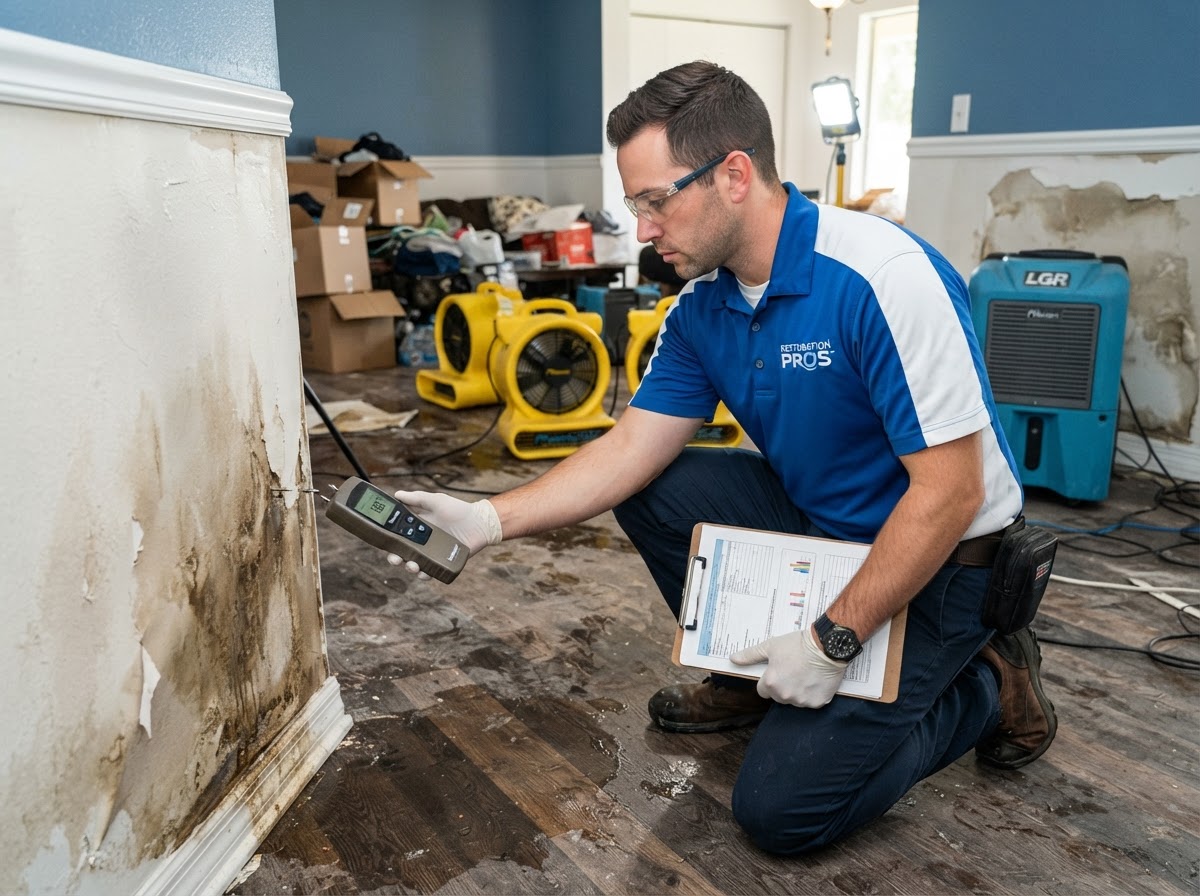
Moisture meters, thermal imaging, and visual inspection help locate water that has migrated beneath flooring, into wall cavities, and behind drywall. Wet drywall, subfloor, and insulation are checked even when the surface looks dry.
3. Remove Standing or Excess Water
Water extraction equipment pulls standing and excess water from carpets, hard flooring, and concrete subfloors. Removing the bulk of the water early shortens the overall drying time.
4. Address Unsalvageable Wet Materials When Necessary
Materials that cannot be effectively dried, such as saturated insulation or severely swollen drywall, may be removed to allow drying of the structure behind them. This step depends on the materials and contamination category.
5. Position Drying and Dehumidification Equipment
Air movers create airflow across wet surfaces while dehumidifiers pull moisture from the air. Together they drive moisture out of framing, subfloor, and wall cavities through controlled air movement and dehumidification.
6. Monitor Moisture Conditions
Moisture measurement over time confirms that materials are drying toward an appropriate dry standard. Equipment is adjusted as conditions change so drying continues efficiently.
7. Complete Final Cleanup and Reassessment
Once materials reach the target dry standard, equipment is removed and the area is reassessed. Final cleanup helps prepare the property for any needed repairs or reconstruction.
8. Document Conditions and Next Steps
Moisture readings, affected areas, and equipment use are documented so the property owner has a clear record of the drying process and a practical plan for any remaining repairs or reconstruction.
Common Causes of Water Damage Near Madison, Alabama
Water damage in Madison homes and businesses comes from many sources. Some arrive suddenly, like a burst pipe or storm-driven rain, while others build slowly over time behind walls and under floors. Understanding the source helps determine the right cleanup and drying approach.
Appliance failures are a frequent cause of indoor water loss. Water heater leaks can release dozens of gallons quickly, while washing machine overflows and burst supply lines send water across laundry room floors. Dishwasher leaks, refrigerator and ice-maker supply-line leaks, sink leaks, P-trap leaks, and garbage disposal leaks can all allow water to seep beneath cabinets and into the subfloor before they are noticed.
Bathroom losses are common as well. Toilet overflows, shower overflows, and bathtub overflows can send water beneath tile and into the wooden subfloor, where it can rot framing over time. HVAC and appliance leaks, including clogged AC condensate drain lines, often drip slowly into ceilings and walls, saturating drywall and insulation from above.
Roof leaks, wet ceilings, and hidden wall moisture can develop after storms or from aging roofing. Ceiling, wall, and hidden water damage may not be visible until drywall sags or stains appear. Crawl-space water, attic leaks, and wet insulation allow moisture to collect in areas that are rarely inspected. Slab leaks and under-floor moisture can saturate flooring systems from below. General plumbing failures and burst pipes can flood multiple rooms quickly, and storm-driven water intrusion adds wind-driven rain and roof breaches to the list of common causes across North Alabama.
Can Water Be Hidden Behind Walls or Under Floors?
Yes. Water frequently migrates behind walls and beneath floors where it cannot be seen. Drywall can absorb water upward through capillary action, insulation inside wall cavities can hold moisture against framing, and baseboards can wick water into the wall from the floor. Subfloor and flooring systems trap water between layers, and cabinetry can hide moisture against the wall behind it.
This moisture migration is why surface drying is not enough. Moisture detection tools help locate damp materials inside wall cavities, beneath flooring, and behind cabinetry so that drying equipment can be directed to the full extent of the loss — not just the visible water.
Common places hidden moisture collects after a water loss include:
- Behind and beneath kitchen and bathroom cabinetry
- Inside wall cavities around wet insulation
- Beneath tile, laminate, and hardwood flooring
- In subflooring and between flooring layers
- Behind baseboards and lower wall sections
- In crawl spaces, attics, and around wet ductwork
Because trapped moisture can continue to affect materials after the visible water is gone, thorough structural drying and dehumidification helps address the full extent of the loss rather than only the surface.
Residential and Commercial Water Damage Help in Madison, AL
Water damage affects both residential and commercial properties, and each presents different cleanup considerations. Madison Water Damage Restoration provides water removal and drying services for both property types throughout Madison and the surrounding area.
Residential Water Damage
Homes, apartments, and condos in Madison can experience water loss from a wide range of sources. Laundry rooms, bathrooms, kitchens, attics, crawl spaces, and living spaces are all common areas where water collects. A single plumbing failure can spread water across multiple rooms and even between floors.
- Homes, apartments, and condos
- Laundry rooms and bathrooms
- Kitchens and appliance leaks
- Attics and crawl spaces
- Living spaces and finished basements
Commercial Water Damage
Commercial properties face similar water sources on a larger scale. Offices, retail spaces, commercial buildings, multi-room facilities, and property-management situations can all experience water loss that affects operations. Larger-capacity drying and extraction equipment can be directed to help reduce business interruption.
- Offices and retail spaces
- Commercial buildings
- Multi-room facilities
- Property-management situations
- Larger-capacity drying equipment
Why Prompt Water Removal Matters
Prompt water removal and drying can help limit moisture migration, material deterioration, swelling, staining, odor development, and secondary moisture problems. The longer water and humidity remain in contact with building materials, the more damage can spread beyond the original area. Prompt moisture control can help reduce conditions that may support microbial growth. No company can guarantee that mold will never develop, but addressing water quickly is an important step in limiting the conditions that allow it.
Water spreading through your property?
Prompt water extraction and drying can help limit additional damage. Call Madison Water Damage Restoration now for water damage assistance.
Water Damage Restoration Project Gallery in Madison, Alabama
The gallery below illustrates common types of residential and commercial water-damage situations Madison Water Damage Restoration is equipped to evaluate, extract, dry and restore throughout Madison and nearby North Alabama communities. Proper restoration can involve locating affected areas, removing standing water, controlling contamination where necessary, drying building materials and monitoring moisture conditions across services like emergency water removal, flood damage cleanup, sewage cleanup, burst pipe water damage cleanup, storm water damage restoration and structural drying.
Gallery images are representative service examples intended to illustrate common water extraction, flood cleanup, sewage cleanup, leak restoration, structural drying and storm-damage situations. Actual project appearance varies by property, water source, building materials, contamination level and site conditions.
Water Damage Restoration Projects in Madison
Water-damage restoration can include identifying affected areas, extracting standing water, removing unsalvageable materials when necessary, drying the structure and verifying moisture conditions before restoration proceeds.
Explore water damage restoration services in MadisonEmergency Water Removal & Water Extraction Near Madison
Rapid water extraction helps remove standing water and reduce continued saturation of flooring, drywall, cabinetry and other building materials following an active water-loss event.
View emergency water removal and extraction near MadisonFlood Damage Cleanup in Madison
Indoor flooding may affect flooring, drywall, trim, cabinets and contents and may require water removal, affected-material evaluation, moisture monitoring and structural drying.
Explore flood damage cleanup services in MadisonSewage Backup & Black Water Cleanup Near Madison
Sewage-contaminated water requires additional safety precautions, appropriate protective equipment, contamination control and careful evaluation of porous materials that may not be suitable for drying and reuse.
Learn about sewage backup and black water cleanup near MadisonBurst Pipe & Plumbing Leak Water Damage Cleanup in Madison
Broken pipes, failed supply lines and concealed plumbing leaks can saturate drywall, insulation, flooring, ceilings and cabinetry and may require both water removal and targeted structural drying.
Explore burst pipe and plumbing leak cleanup in MadisonStorm & Tornado Water Damage Restoration Near Madison
Severe North Alabama weather can allow rainwater to enter through damaged roofing, windows, exterior openings or structural components and create interior water damage requiring extraction and drying.
View storm and tornado water damage restoration near MadisonStructural Drying & Dehumidification in Madison
Professional drying may use air movers, commercial dehumidifiers, moisture meters and controlled airflow to remove excess moisture from affected structural materials.
Explore structural drying and dehumidification in MadisonCommercial Water Damage Restoration Near Madison
Commercial water losses may affect offices, retail spaces, warehouses and other facilities and can require coordinated extraction, drying and moisture monitoring while considering business operations and occupied spaces.
View commercial water damage restoration near MadisonWater Heater Leak Cleanup in Madison
Leaking or failed water heaters can release water into garages, utility rooms, closets and adjacent finished spaces, potentially affecting drywall, flooring and nearby stored materials.
Explore water heater leak cleanup services in MadisonWashing Machine Overflow & Laundry Room Water Damage Cleanup Near Madison
Washing-machine supply-line failures, drain backups and appliance overflows can quickly spread water beneath flooring, baseboards, cabinets and adjoining rooms.
Learn about washing machine overflow cleanup near MadisonNeed Water Damage Cleanup in Madison?
Contact Madison Water Damage Restoration to discuss the water source, affected areas and current property conditions. Providing photographs and basic details about the water damage can help the team better understand the requested service and determine the appropriate next step.
Water Damage Restoration Near Madison and North Alabama Communities
Madison Water Damage Restoration is based in Madison, Alabama and provides water damage cleanup and structural drying services to Madison and the surrounding North Alabama communities. The company does not maintain an office in each listed city; rather, these are the service-area communities where water damage assistance is available. Property owners in any of these areas can call (256) 588-8480 to request service.
Need Water Damage Cleanup Near Madison?
Property owners searching for water damage restoration near me in Madison and the surrounding communities can call for water extraction and drying assistance.
Water Damage Restoration FAQs for Madison, AL
These frequently asked questions address real concerns property owners have after discovering water damage. Each answer responds directly first, then expands with helpful detail.
What should I do first after discovering water damage in my Madison home?+
Stop the water source if it can be done safely, avoid any energized electrical areas near the water, and move valuables away from the affected area when practical. Then contact a water damage cleanup company for water extraction and a moisture assessment. Water can migrate beneath flooring and behind walls even when the surface looks dry, so prompt action helps limit the spread.
How quickly should standing water be removed?+
Standing water should be removed as soon as it is safe to do so. The longer water sits, the more it can soak into flooring, subfloors, drywall, and wall cavities, increasing the chance of secondary moisture problems. Fast water extraction and the early setup of drying equipment can help reduce conditions that may support microbial growth and limit material deterioration.
What is the difference between water removal and water damage restoration?+
Water removal (or water extraction) is the physical step of pulling standing or excess water out of a property. Water damage restoration is the broader process that includes extraction, moisture detection, removal of unsalvageable wet materials when necessary, structural drying, dehumidification, and final cleanup. Restoration aims to return the affected areas to a dry, stable condition.
Can water damage be hidden behind drywall?+
Yes. Water often travels behind drywall, into wall cavities, insulation, baseboards, and beneath flooring where it is not visible from the surface. Wet drywall may feel firm but still hold moisture inside. Moisture meters and thermal imaging help locate hidden moisture so drying equipment can be directed to the right areas.
How do you dry water underneath flooring?+
Drying water beneath flooring typically involves extracting surface water first, then using a combination of air movers and dehumidifiers to create airflow across and beneath the flooring system. In some cases, flooring or sections of subfloor must be lifted or removed to access trapped moisture. The approach depends on the flooring type, the amount of water, and how long it has been present.
What happens after a water heater leaks?+
A water heater leak can release a large volume of water quickly, saturating the floor, baseboards, nearby drywall, and the subfloor beneath the tank. After the water source is controlled, the process generally involves extracting the standing water, checking moisture paths to surrounding materials, and setting up drying equipment to address the utility closet framing and finished floors nearby.
Can a washing machine overflow damage walls and flooring?+
Yes. A washing machine overflow or burst supply line can send soapy water across a laundry room floor and into adjacent areas. Detergent-laden water can wick under baseboards and into the subfloor cavity beneath the laundry equipment. Extraction, subfloor moisture checks, and drying of the surrounding walls and flooring help address the loss.
What should I do after a toilet or sewage backup?+
Avoid direct contact with the water, as sewage and black water can contain harmful contaminants. Do not attempt to clean contaminated water with standard household methods. Keep people and pets away from the affected area and contact a water damage cleanup company experienced with Category 3 water. Professional extraction, containment, and antimicrobial treatment are typically required.
How does structural drying work?+
Structural drying uses controlled air movement and dehumidification to remove moisture from building materials such as framing studs, subfloors, drywall, and insulation. Air movers direct airflow across wet surfaces while dehumidifiers pull moisture from the air. Moisture conditions are monitored over time with meters and hygrometers until materials reach an appropriate dry standard.
Can an HVAC condensate drain cause significant water damage?+
Yes. A clogged AC condensate drain line or overflowing drain pan can release steady amounts of water into ceilings, walls, or around the air handler. Because the leak is often slow and hidden, water can saturate drywall and insulation before it is noticed. Moisture detection helps locate the full extent of the affected area for drying.
What should I do if my ceiling is wet after a roof leak?+
A wet or sagging ceiling after a roof leak can indicate trapped water above the drywall. Avoid standing directly beneath a bulging ceiling, and do not puncture it without assessing the situation. A water damage cleanup company can inspect the ceiling, extract trapped water, check the attic insulation and framing, and set up drying for the affected drywall and surrounding materials.
Do you provide commercial water damage restoration in Madison, AL?+
Yes. Madison Water Damage Restoration provides water damage cleanup and drying services for commercial properties in Madison, AL, including offices, retail spaces, and multi-room facilities. Larger-capacity extraction and drying equipment can be directed to help reduce business interruption. Property owners can call (256) 588-8480 to request commercial water damage assistance.
Need Water Damage Help in Madison, Alabama?
Prompt assessment and water extraction can help reduce additional water damage and limit the spread of moisture through your property. Call Madison Water Damage Restoration now, or request service to share details about your situation.